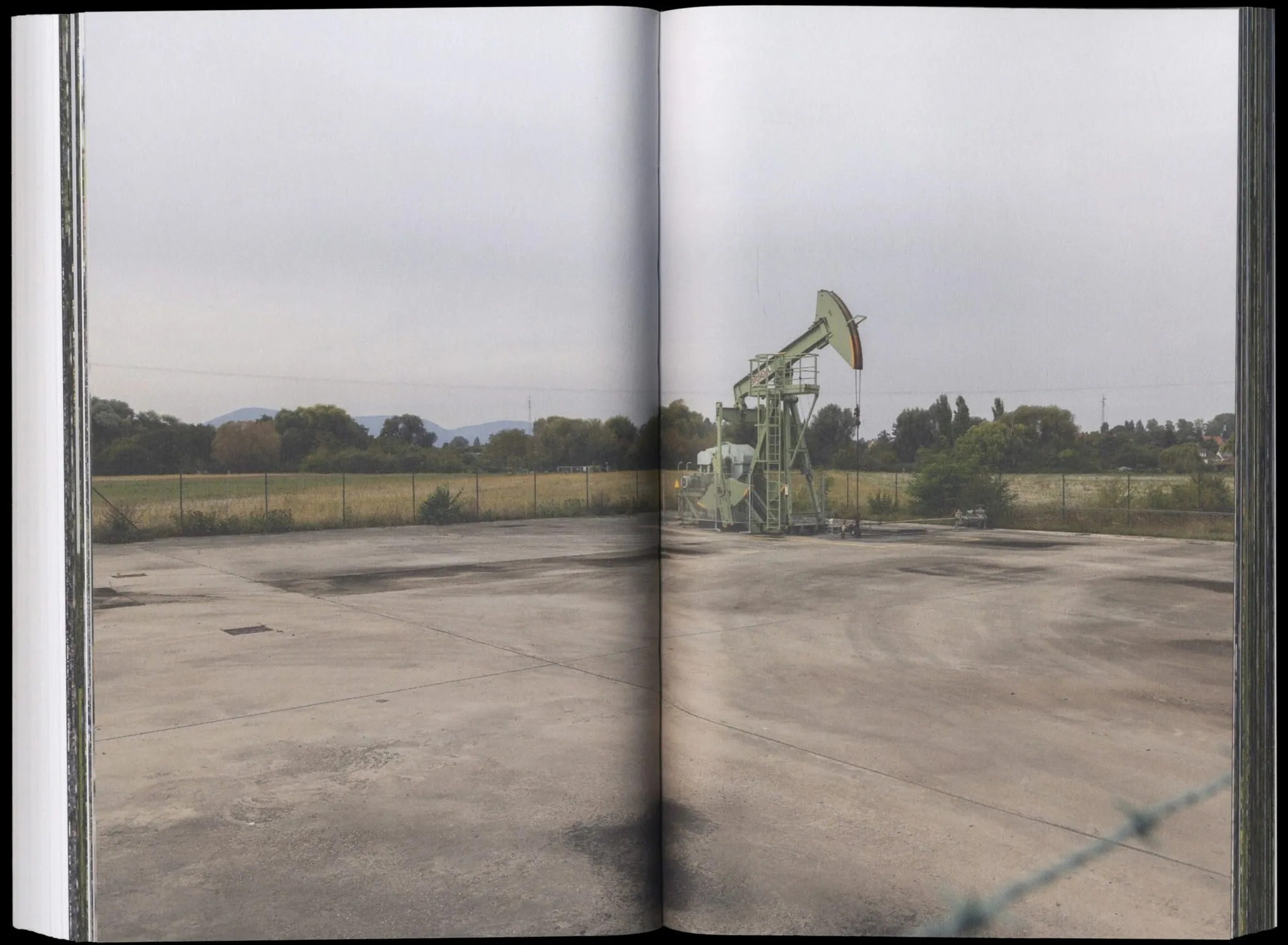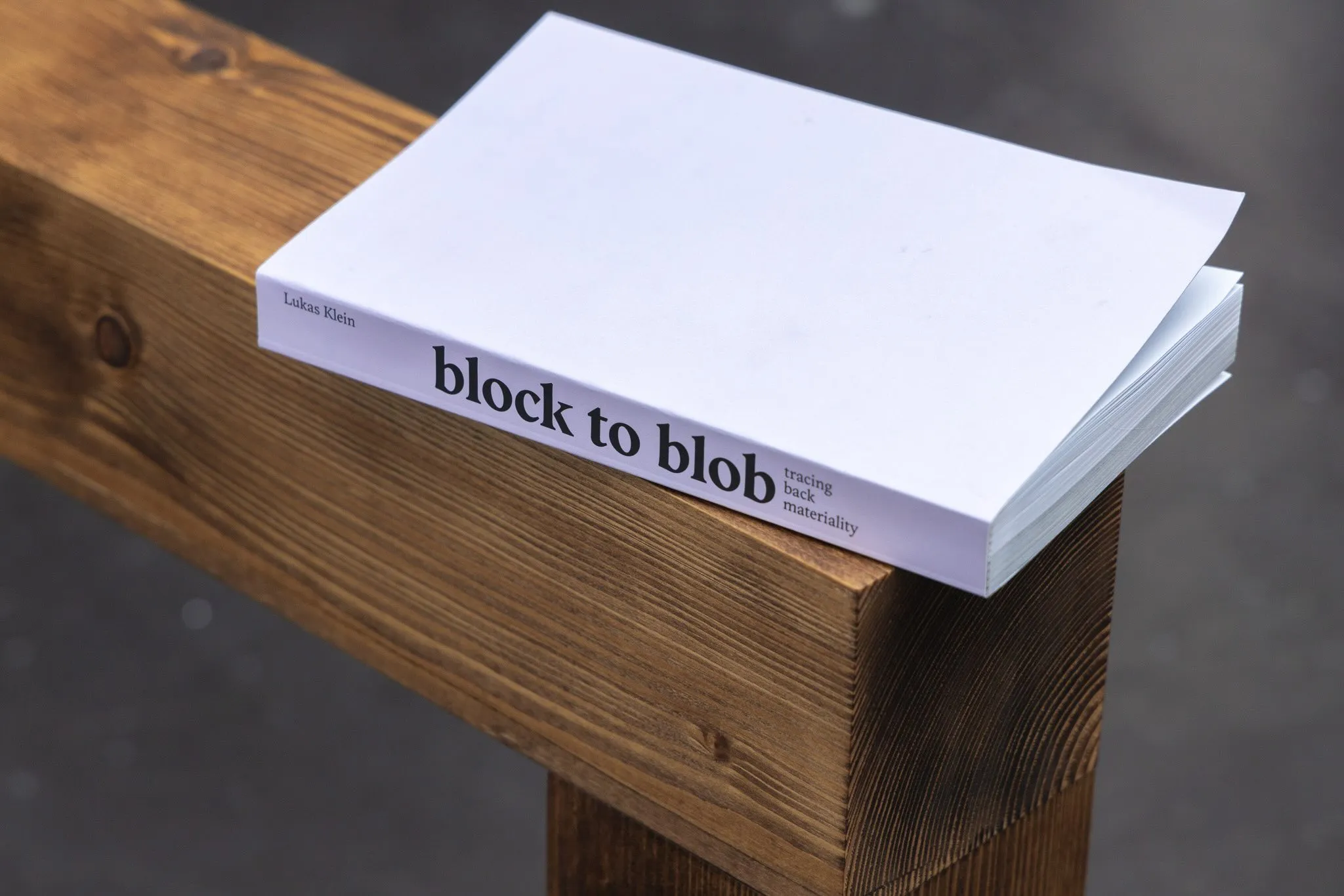
Plastic objects are everywhere, their smooth, finished surfaces hiding the material’s origins. Developed as a diploma project at HfG Karlsruhe, the work approaches plastic as something both omnipresent and strangely anonymous. Through text, videos and objects, the project traces the hidden pathways of plastics and reveals the industrially altered landscapes required for their production. Karlsruhe—terminus of the Transalpine Pipeline, one of Germany’s most important oil pipelines—emerges as a key site within the petro-industrial complex.
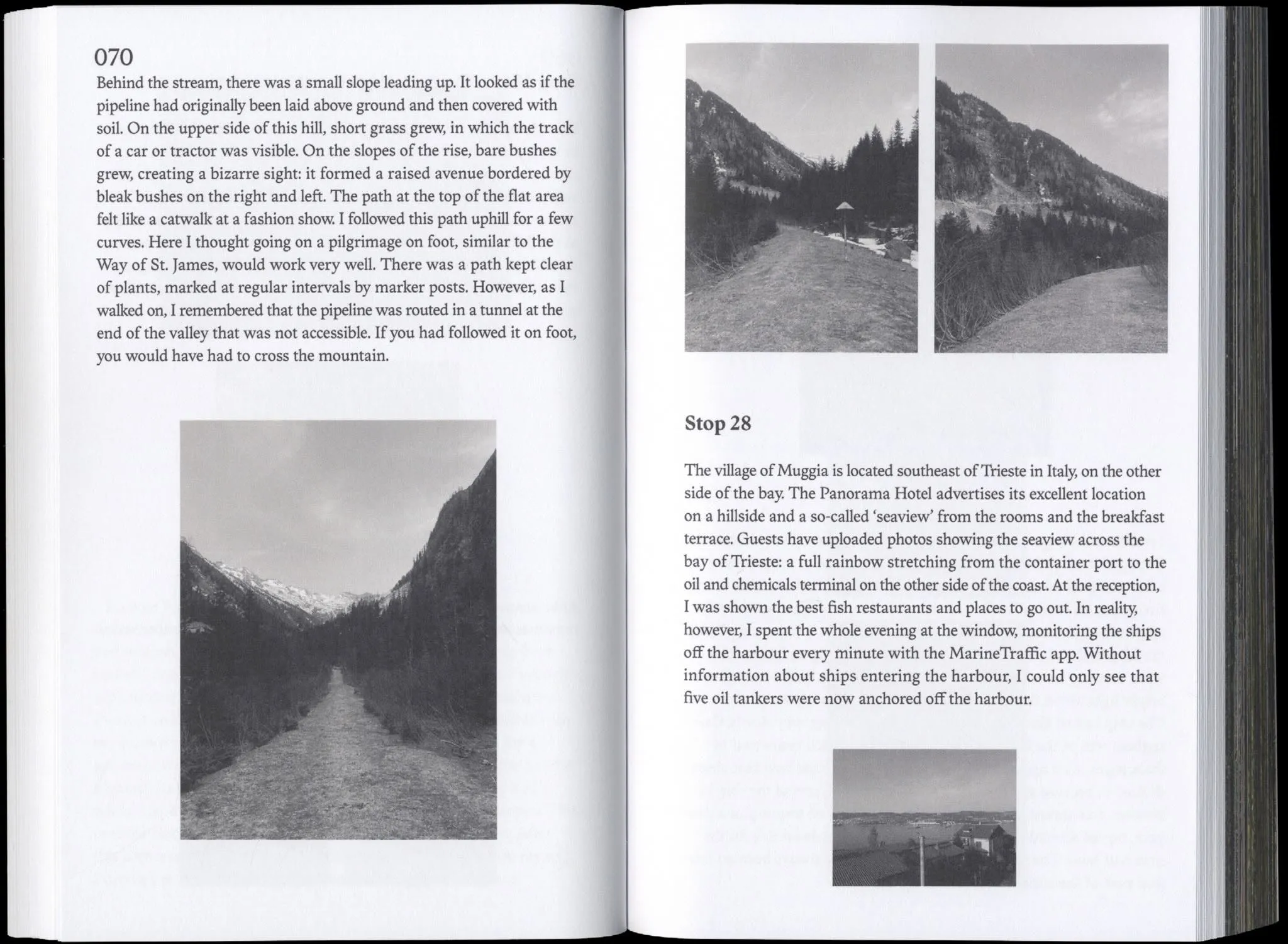
After visiting a local plastic producer I traced back their chemical feedstock, leading to Germanys biggest refinery just outside of the city. The crude oil needed to be refined into materials used to make plastic arrives in Karlsruhe through TAL, the Transalpine Pipeline. It connects Karlsruhe across the Alps to Triest in Italy, where tankers from all around the world arrive at a dedicated oil terminal.
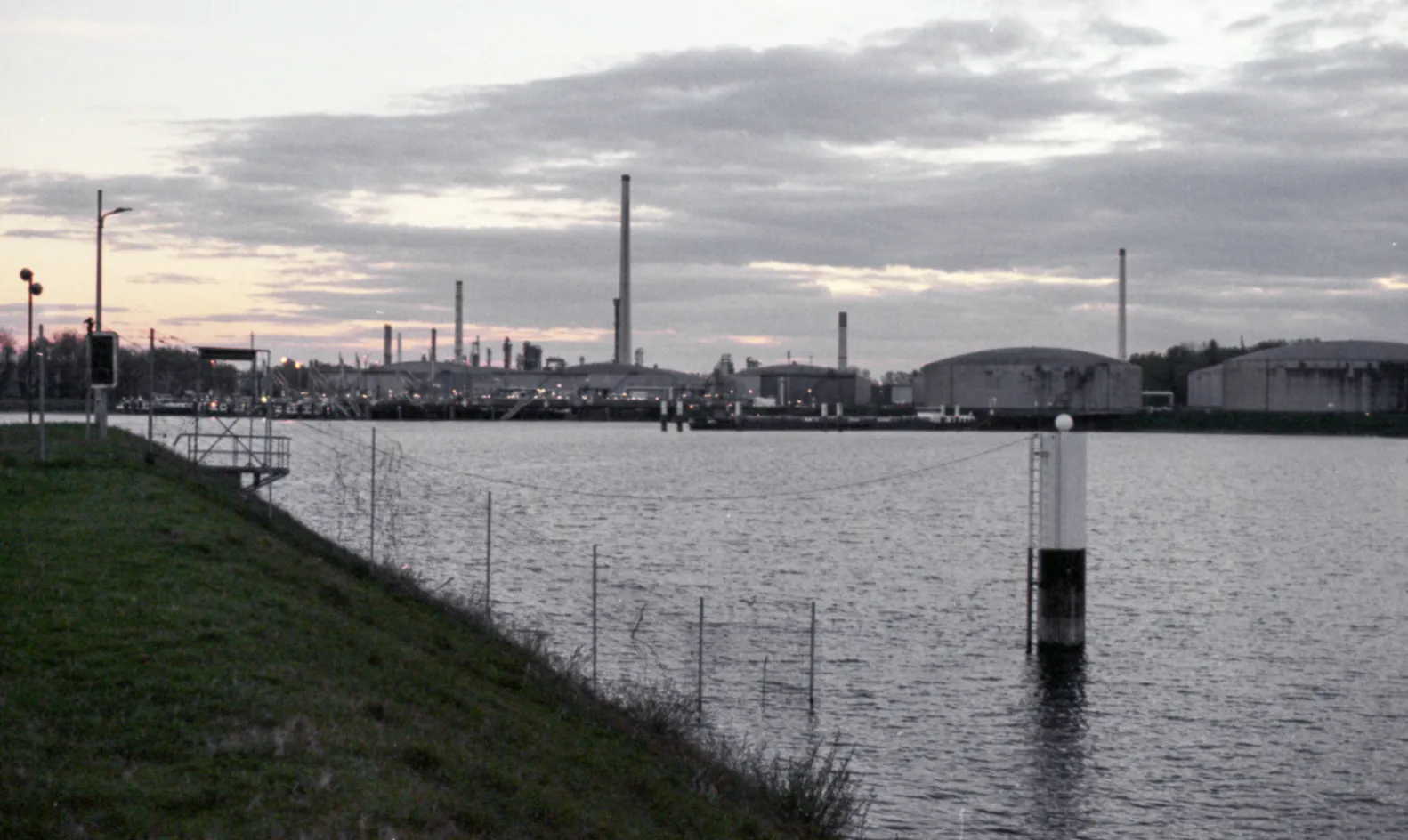
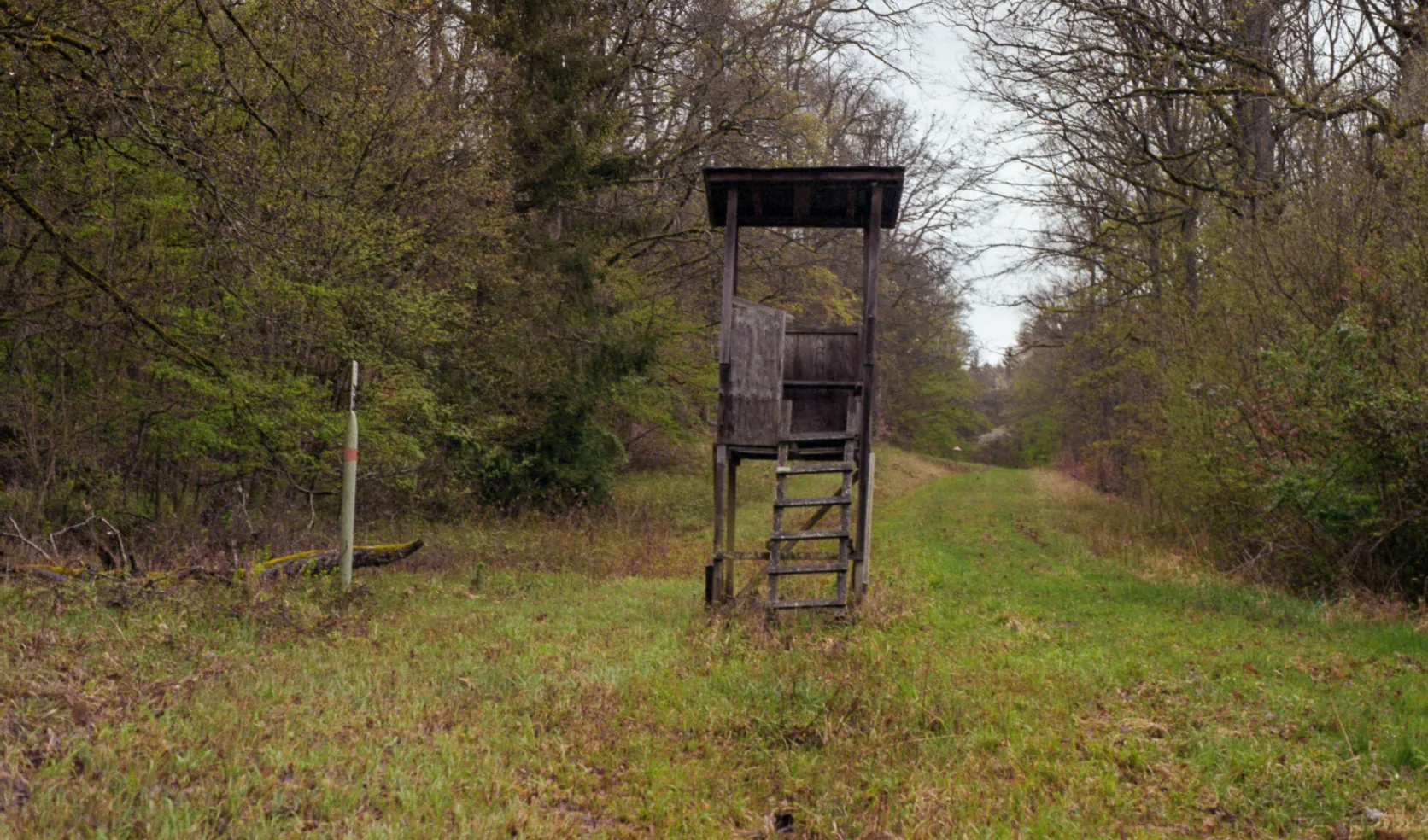
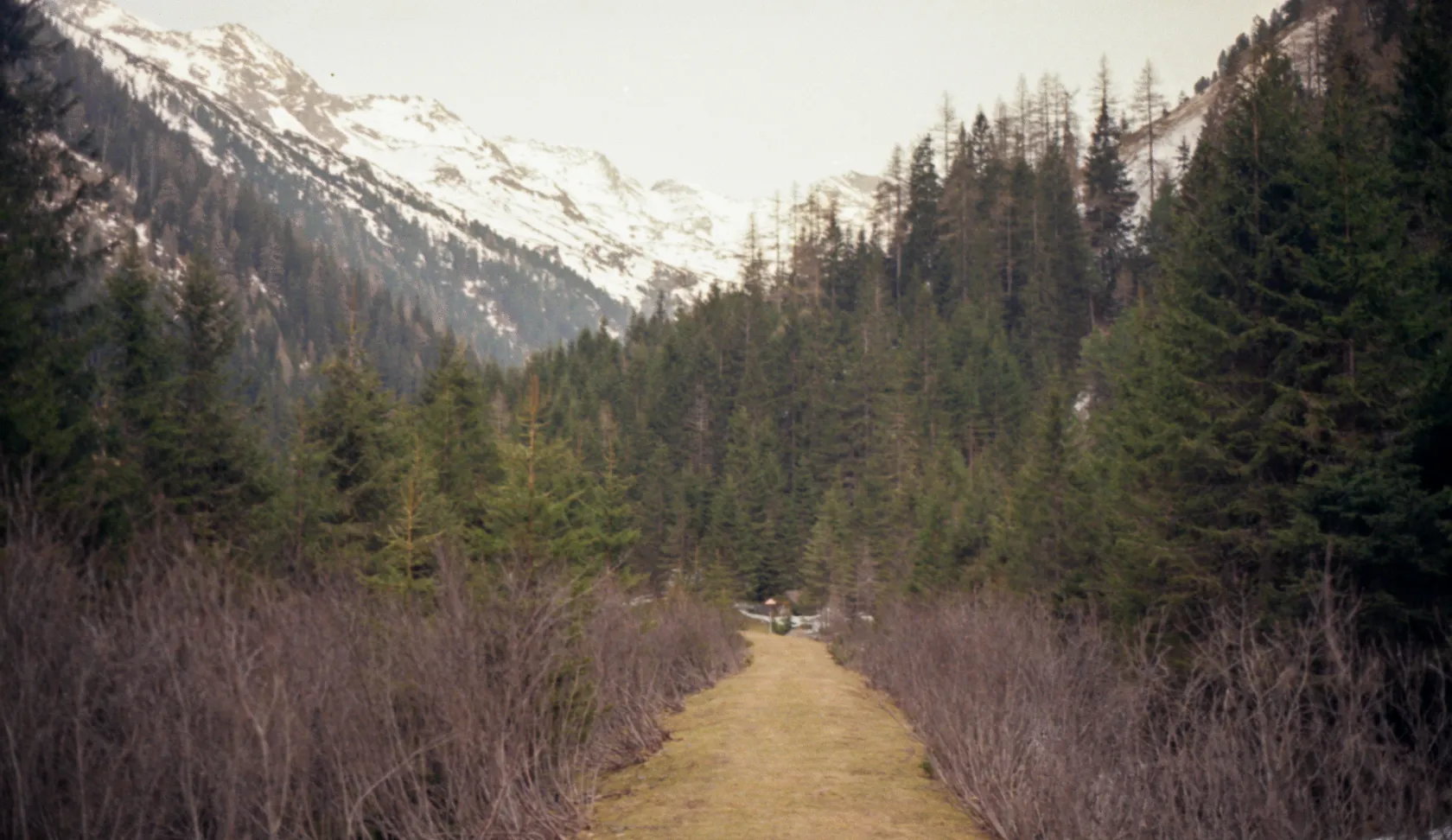
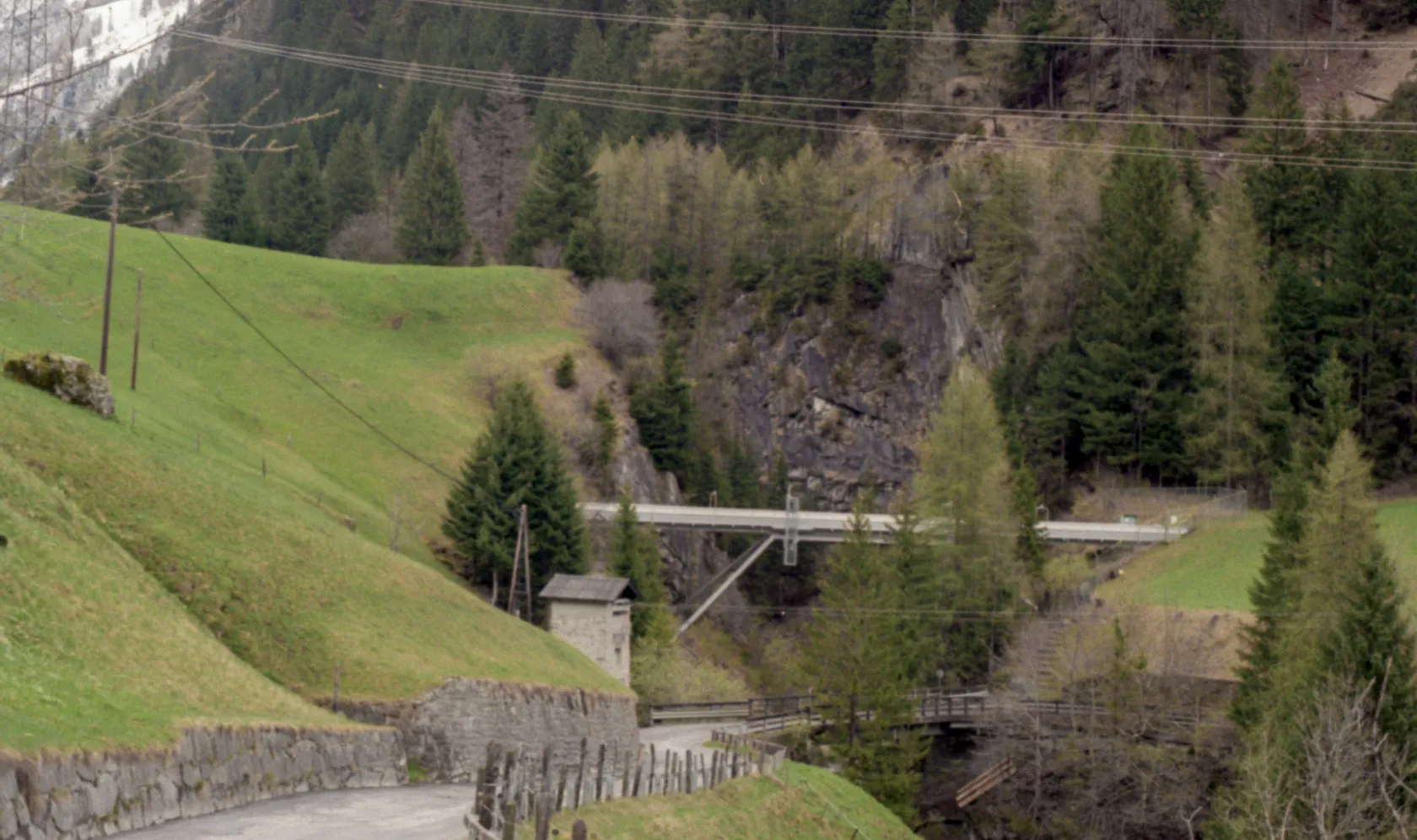
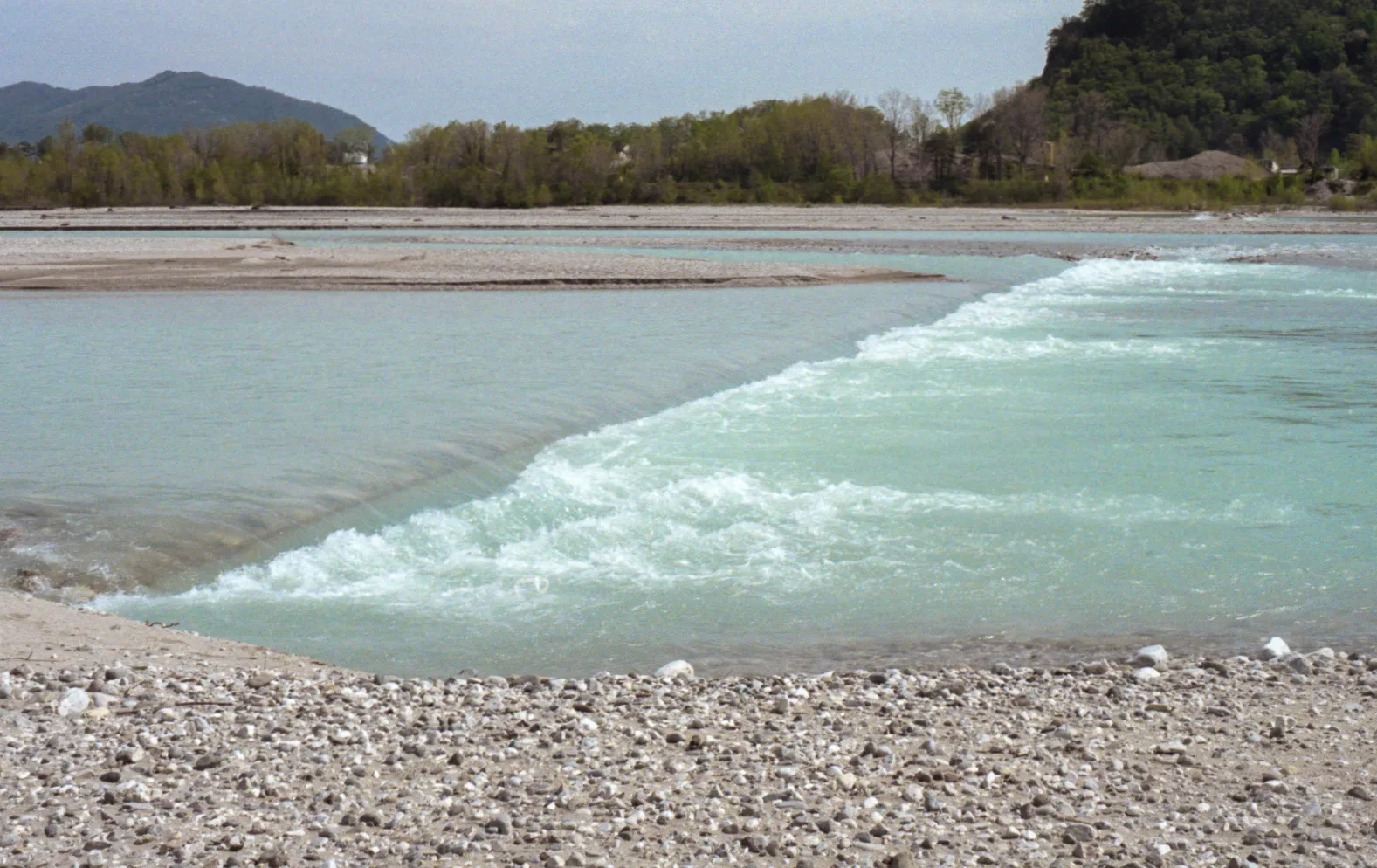
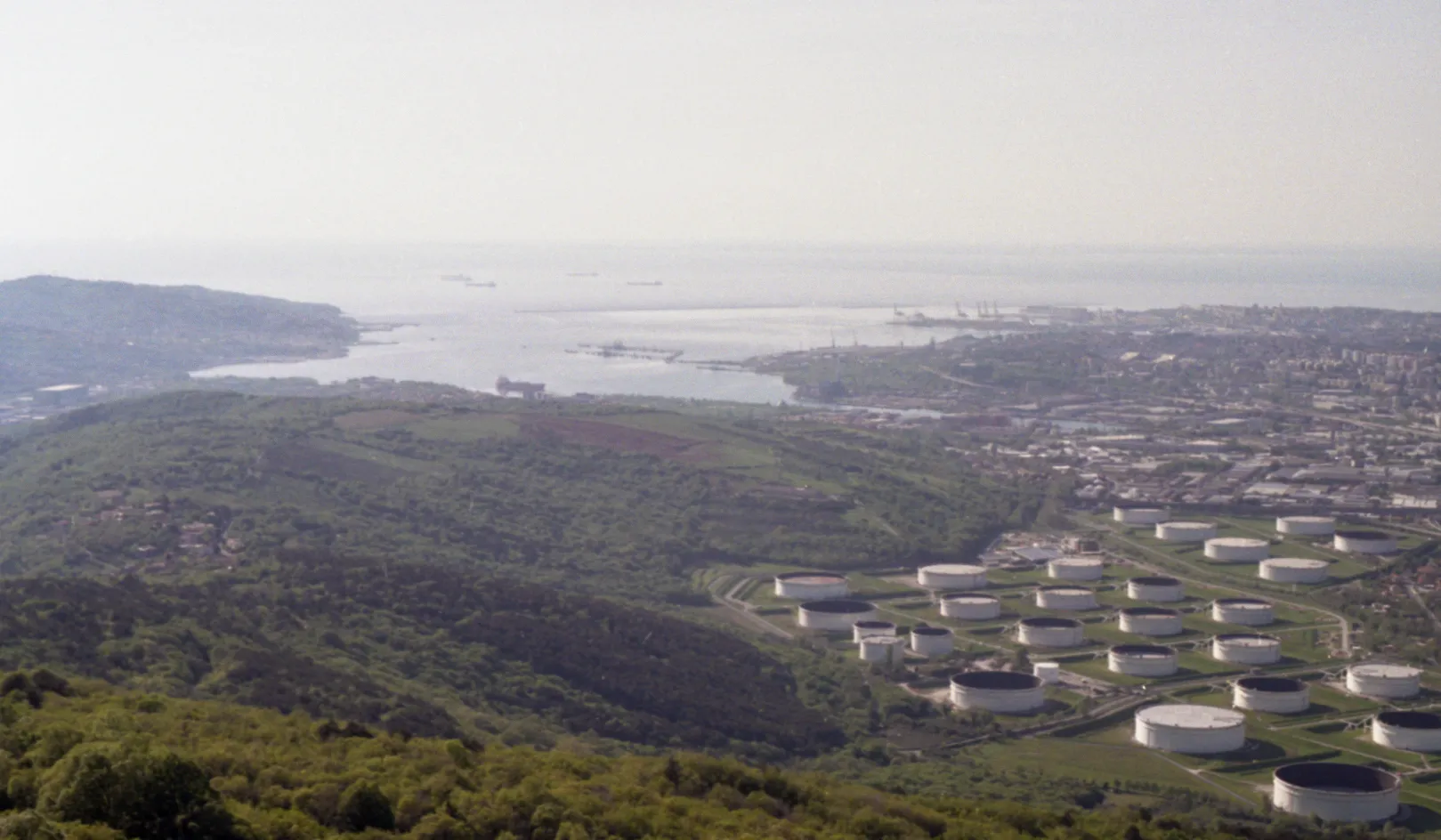
Watching a fleet of oil tankers in the bay, being unable to continuing tracing the material flow of plastic, a decisive turning point of my research emerged: Petroleum is not only found in countries like Algeria or Saudi Arabia; It was here in Germany all along. Beneath Karlsruhe and the upper Rhine valley lays an oil bearing geological formations, which gets explored and extracted for over a century.
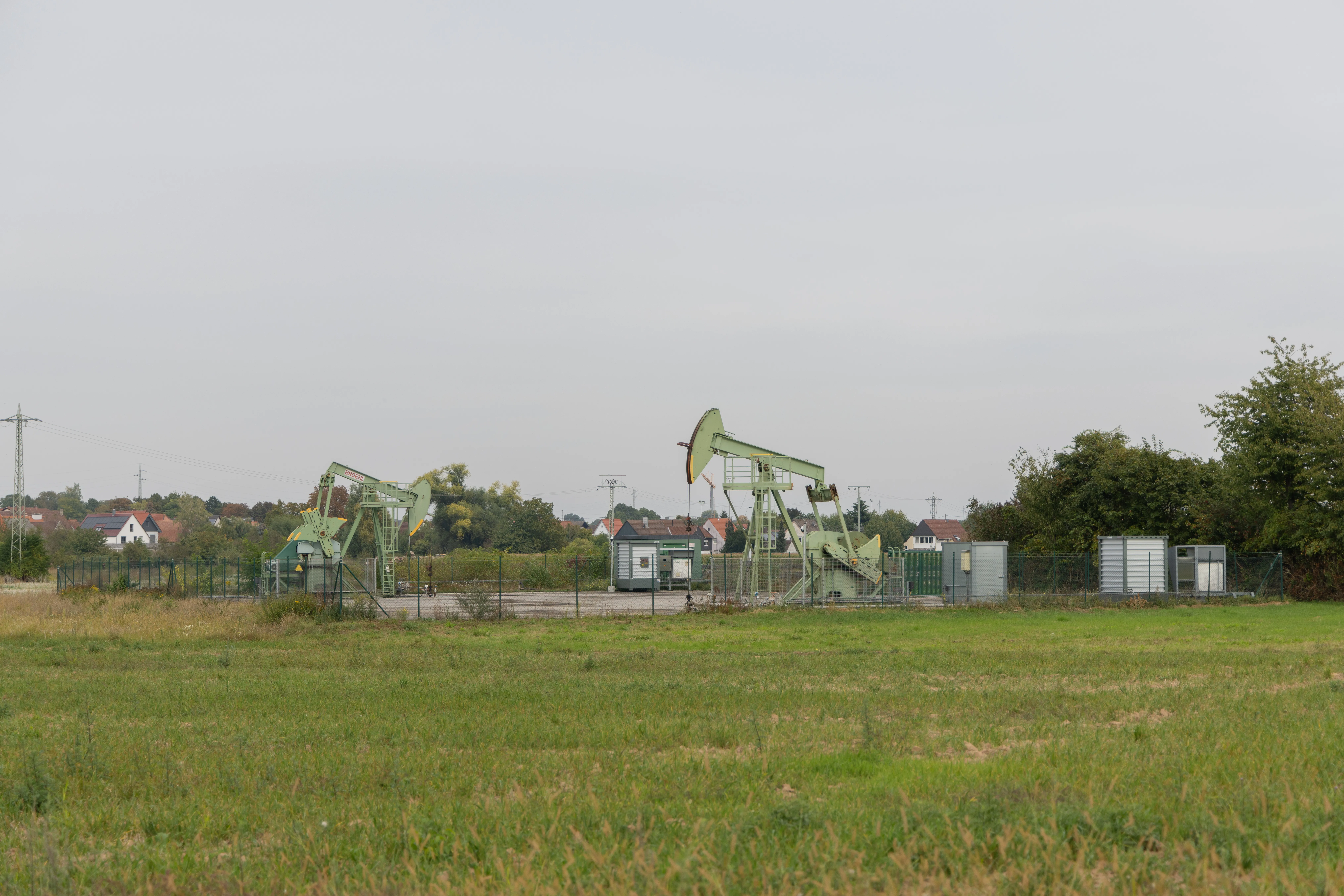
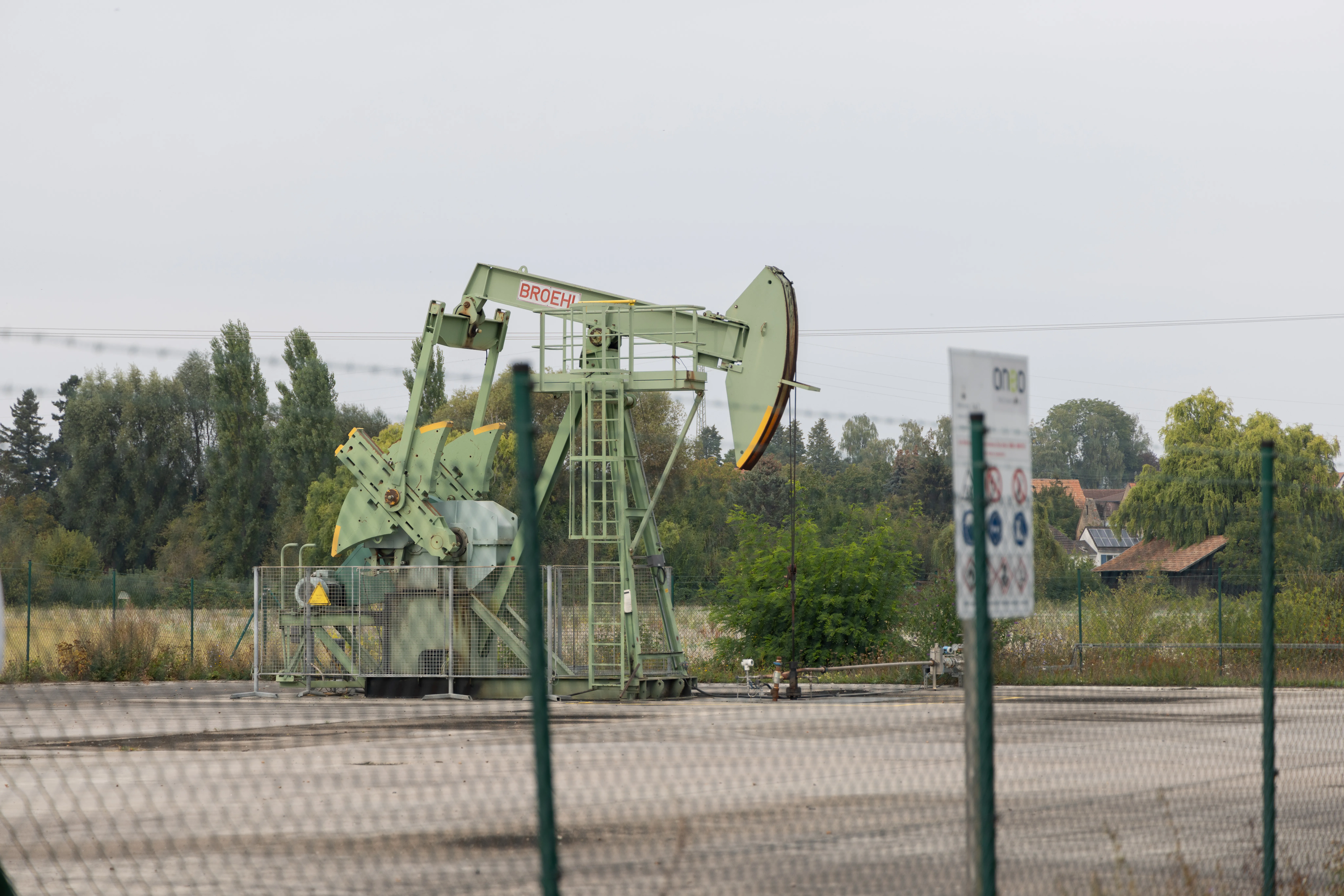
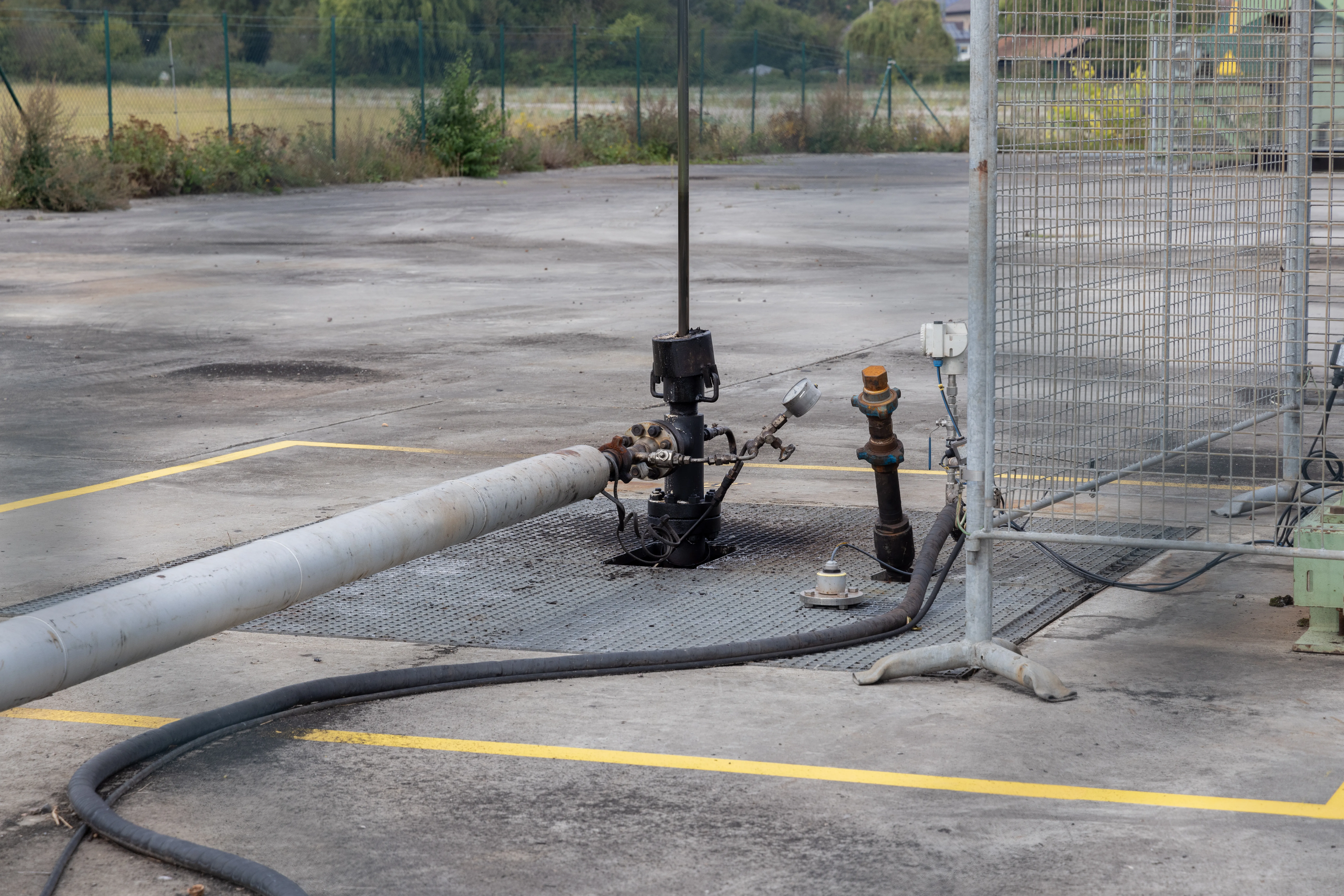
After visiting drilling sites and active oil fields, my journey concluded in Alsace, where Petroleum, the substance plastic is made from, occurs naturally as oil springs in a forest.
Flys are buzzing around, wild boars are bathing in the puddles, rubbing themselves against the surrounding trees. The springs in the forest reframed my understanding of oil: Petroleum is not an isolated substance, cut off from its surroundings, but part of the whole ecosystem. It is a naturally occurring substance, integrated into natural processes, not a closed ‘deposit’ so deep underground in another world that it would never be seen without human extraction.
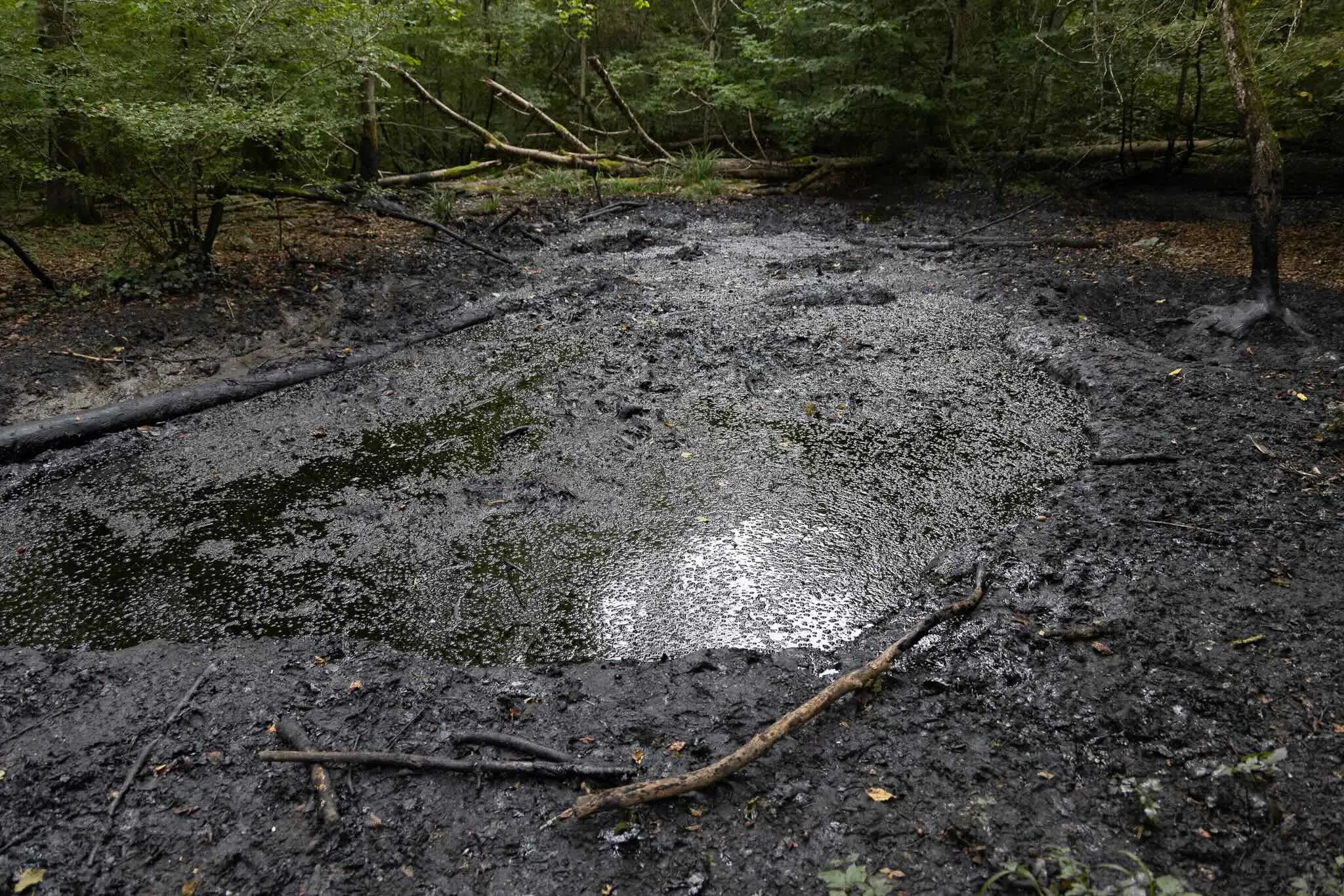
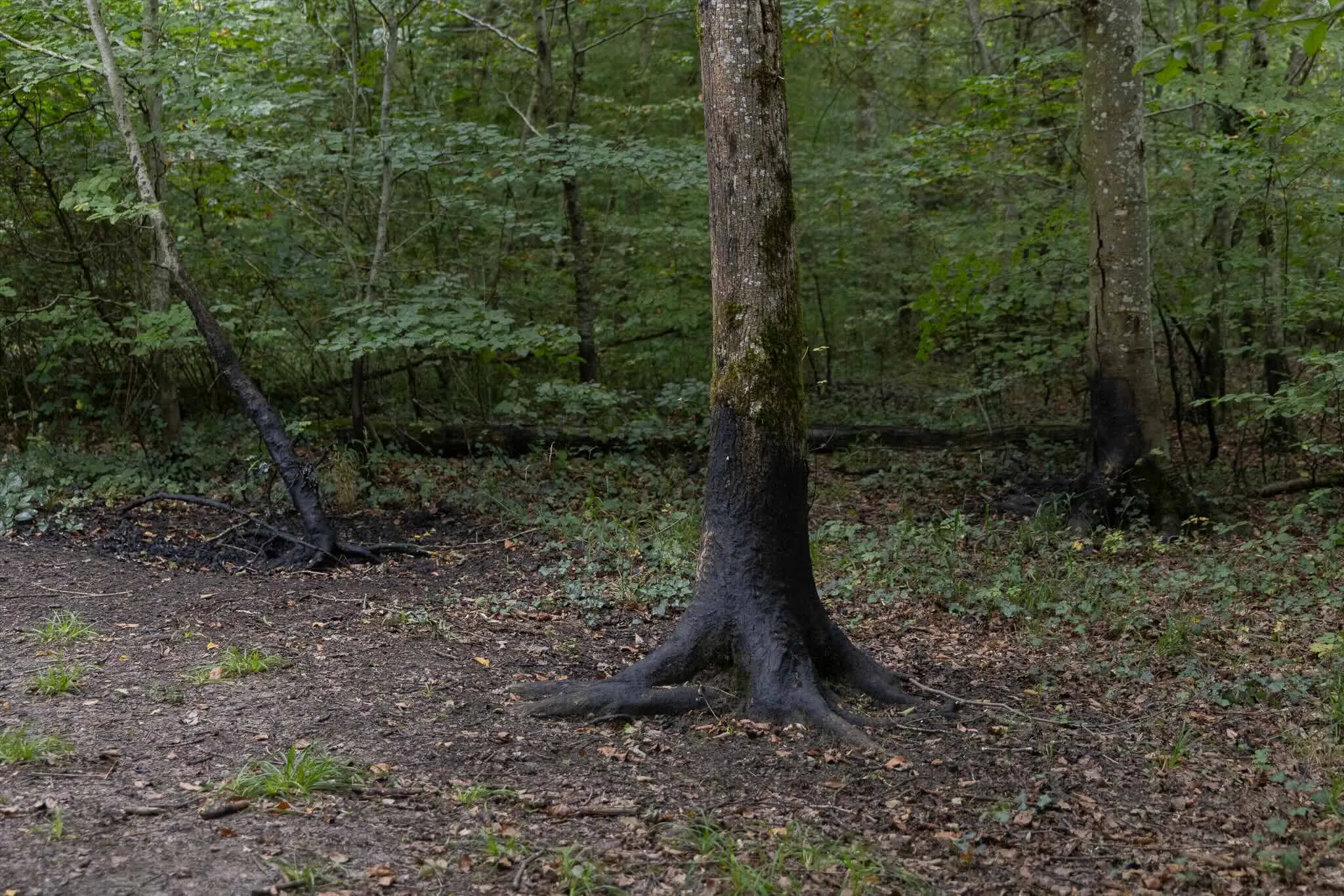
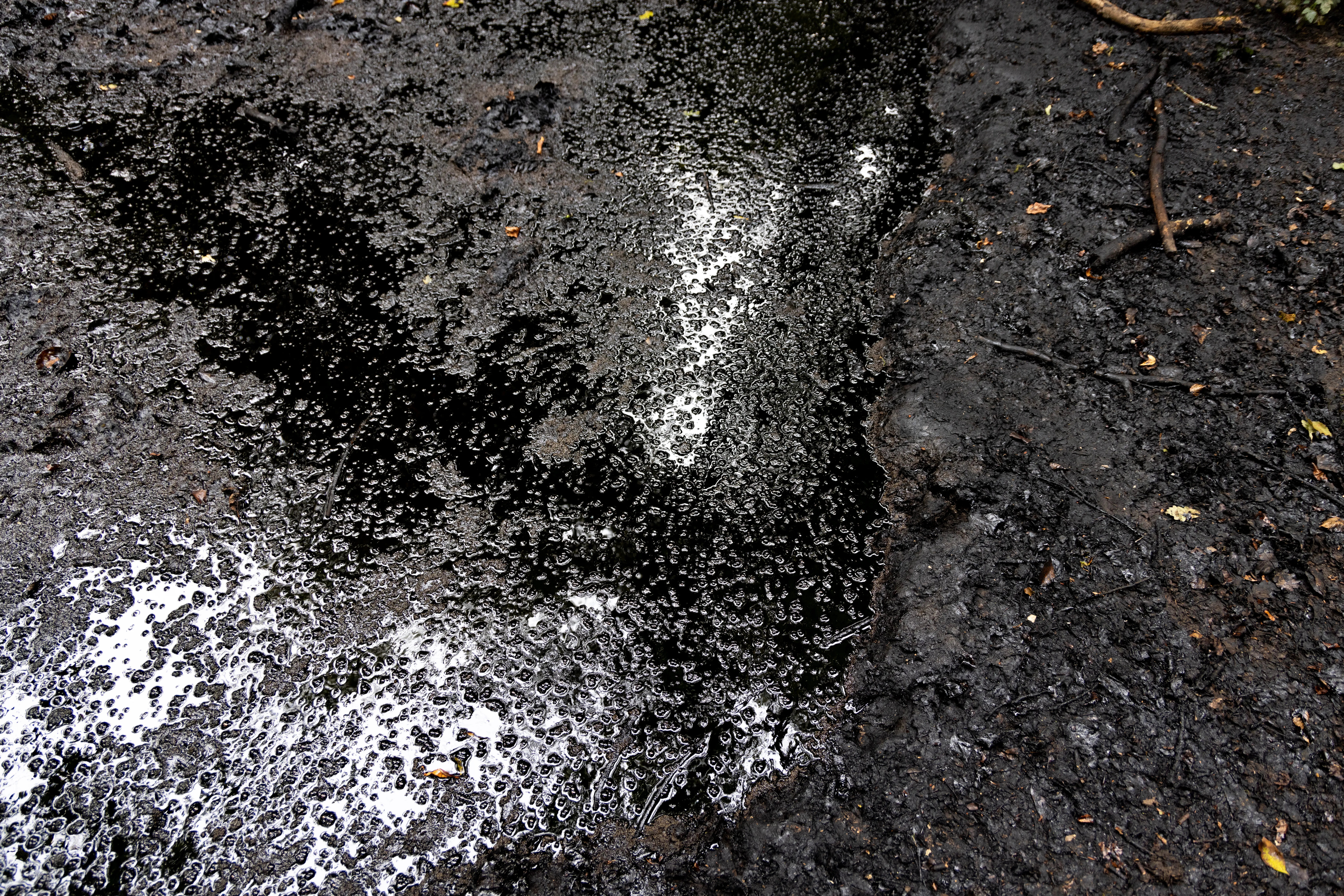
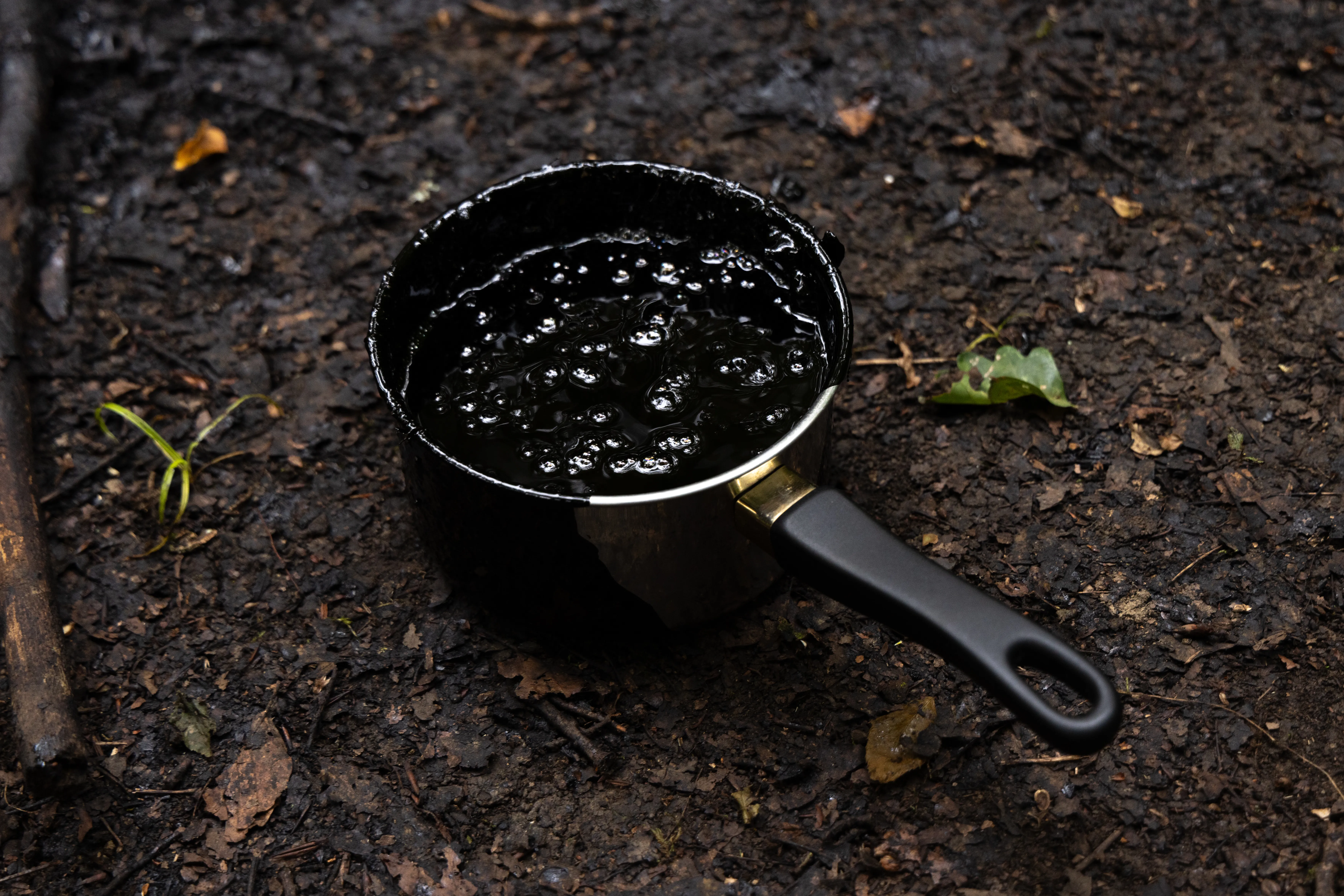
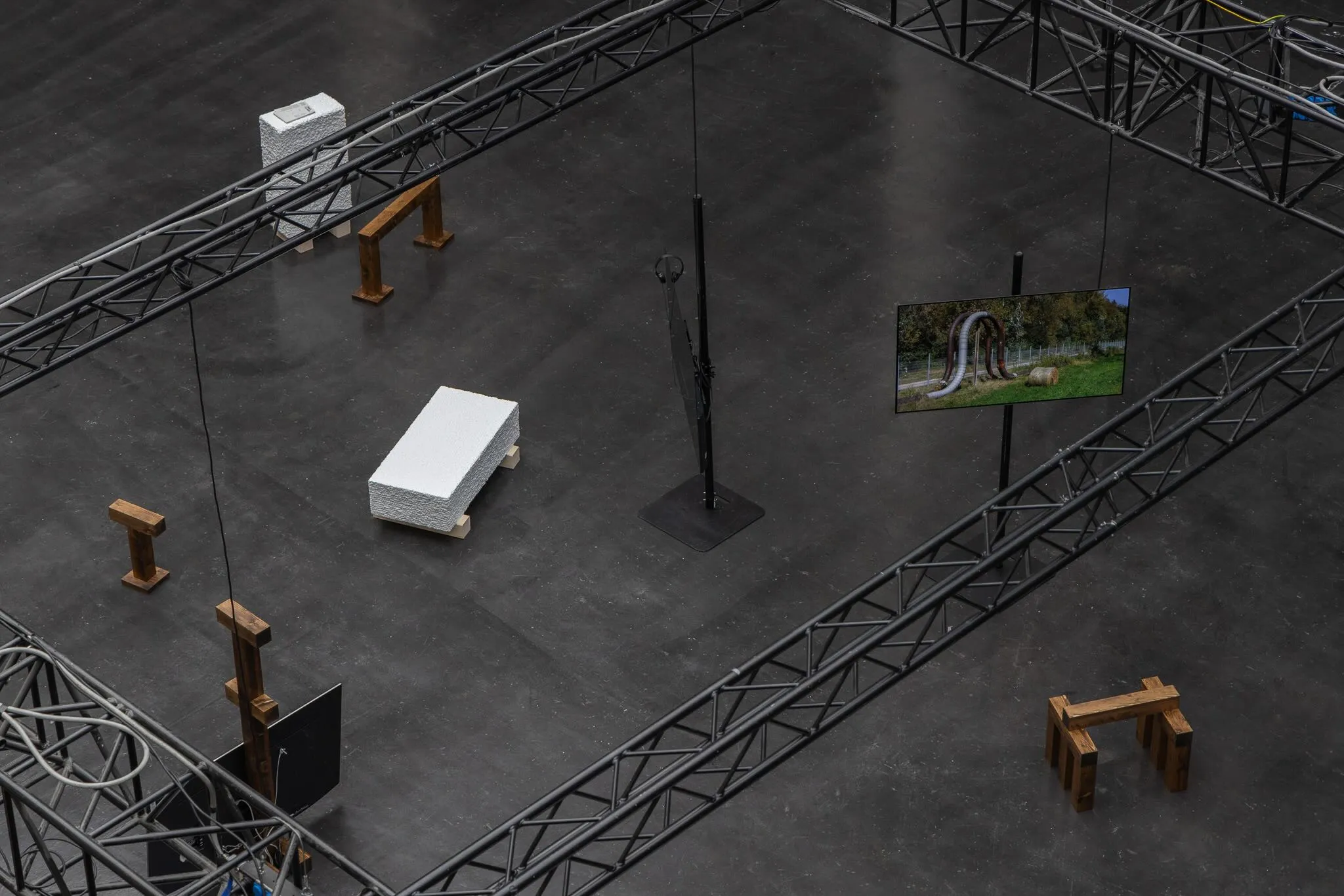
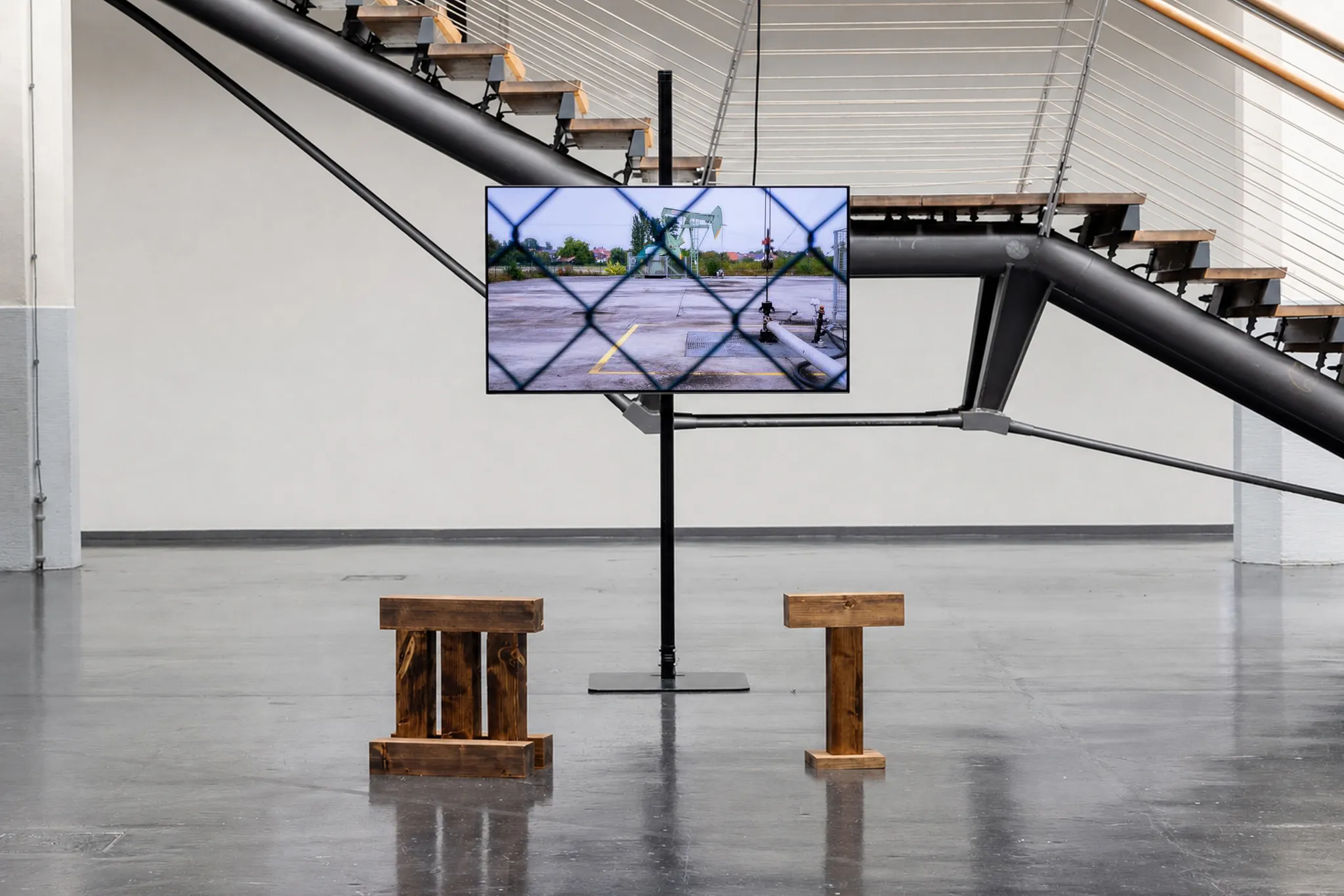
Video installation, two-channel: Block to Blob, 11:37 min
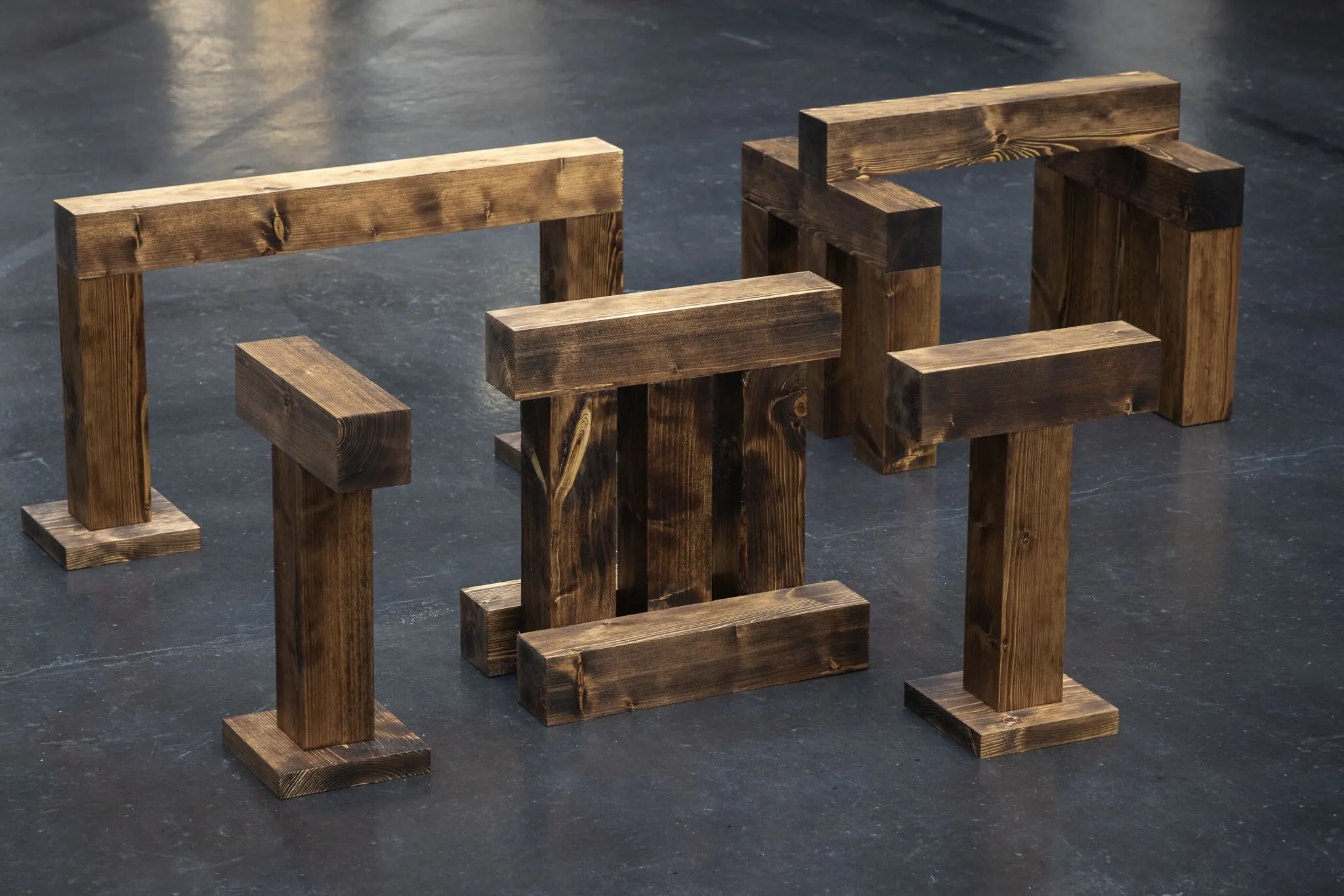
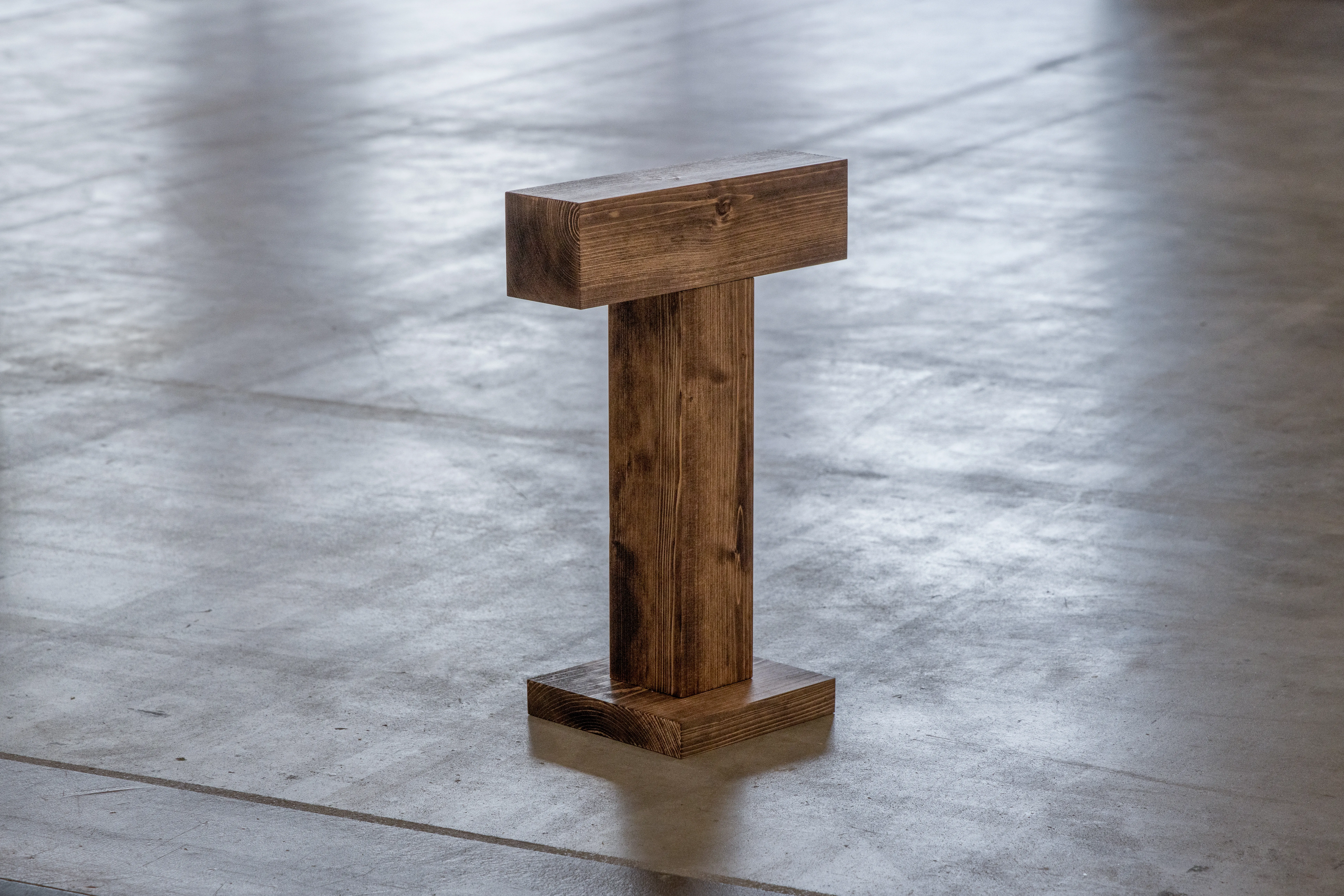
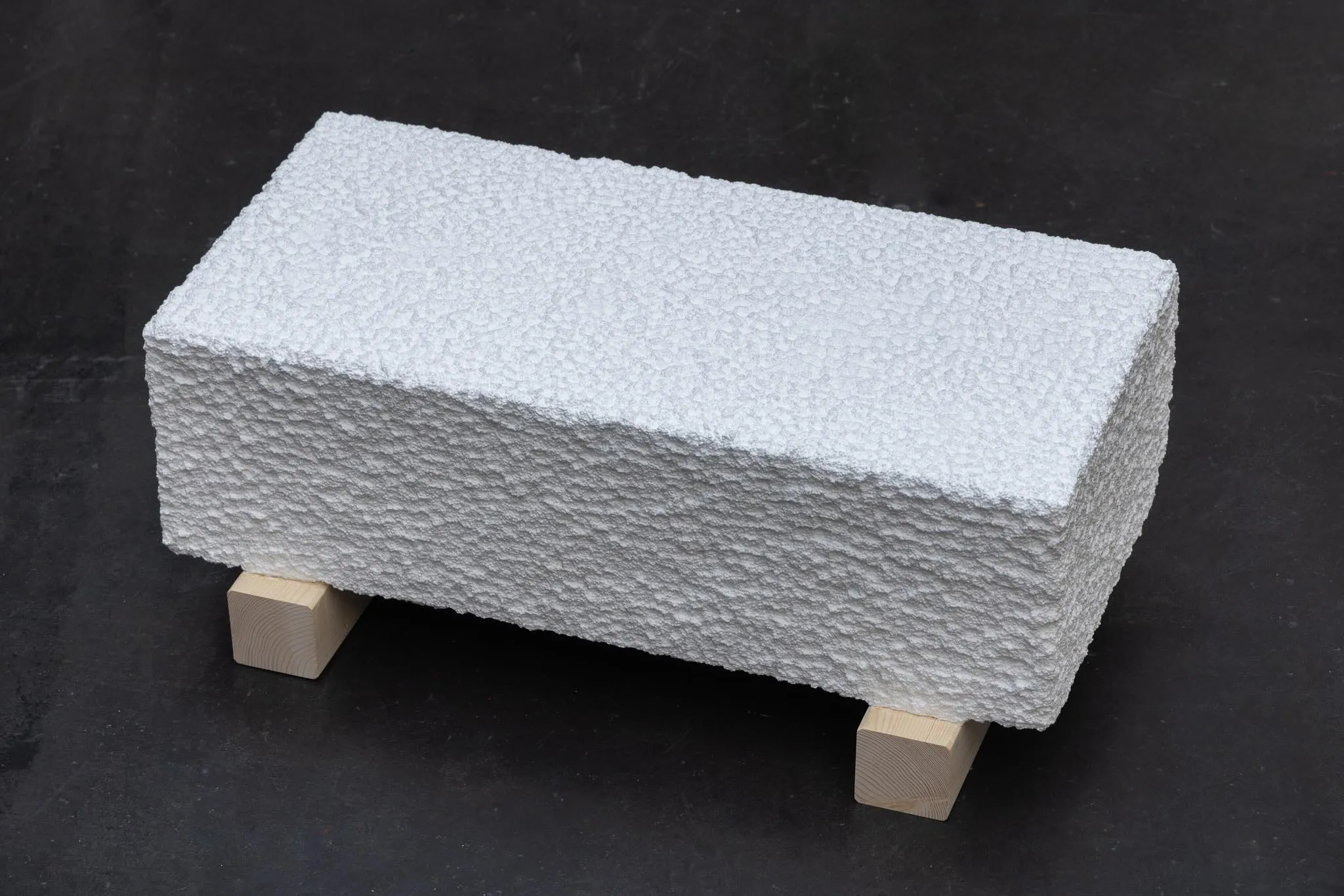
Furniture series: petroleum-coated spruce wood, pinched expanded polystyrene
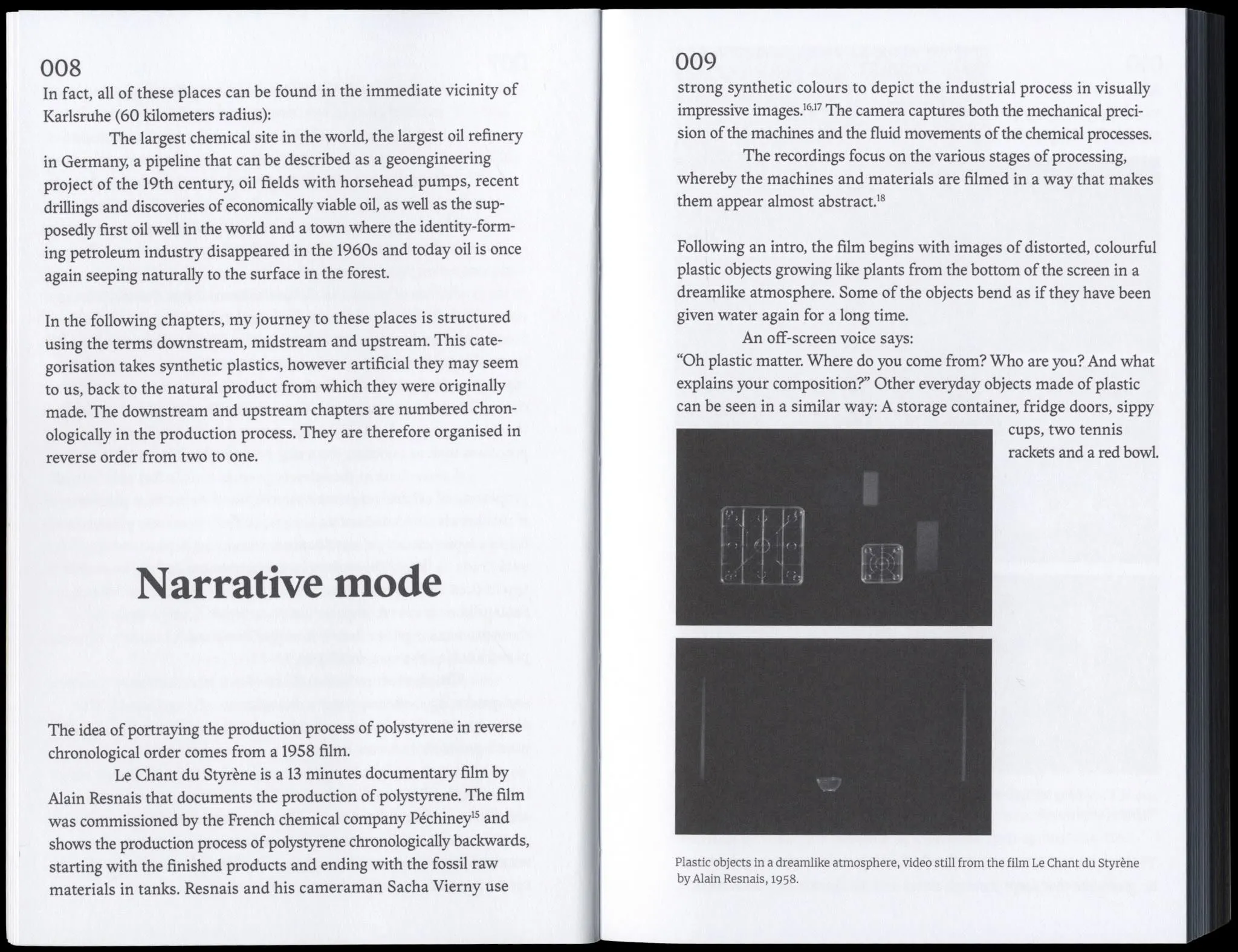
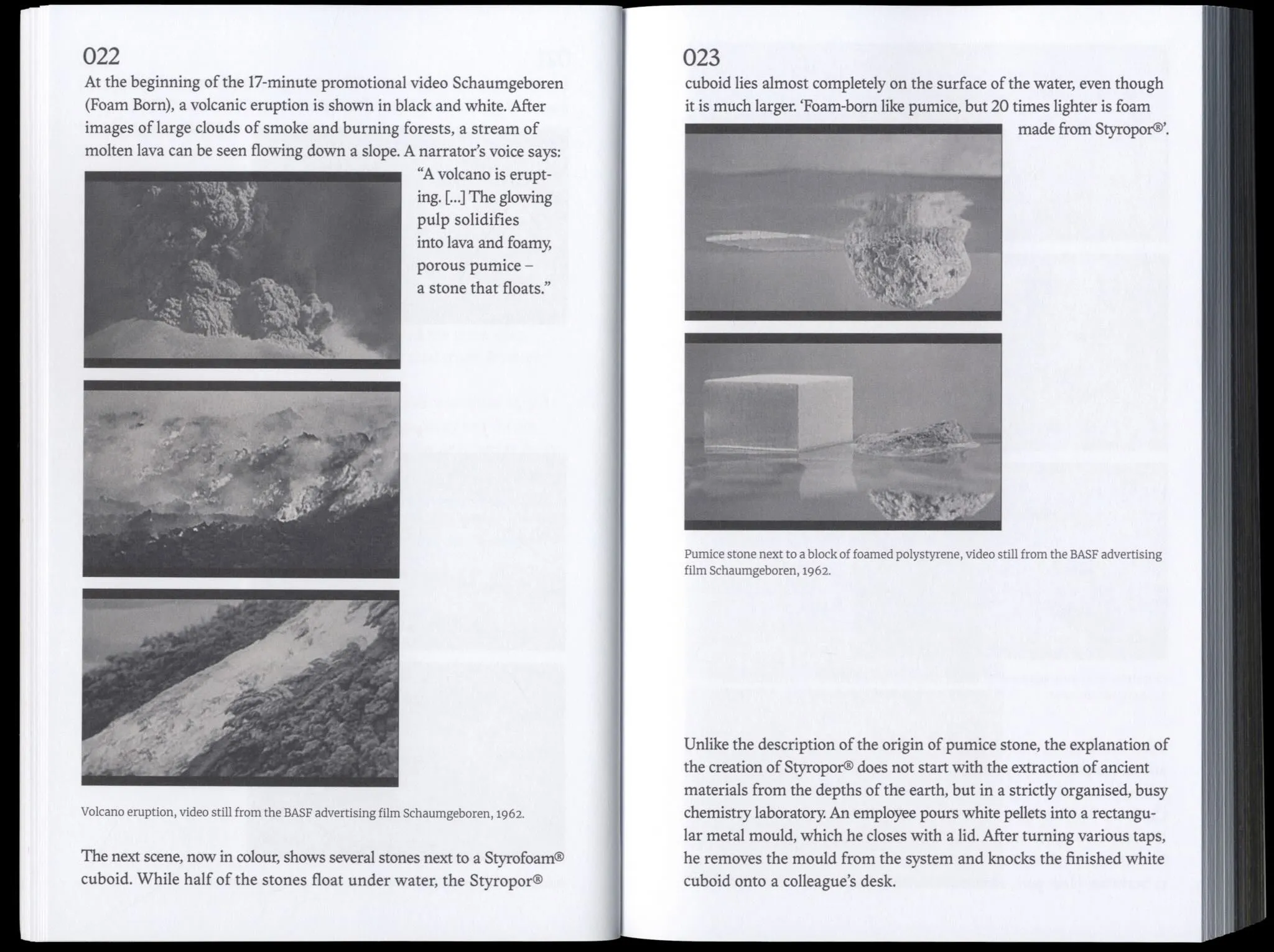
Research Publication, Block to Blob, Graphic Design: Nicolas Poirot